


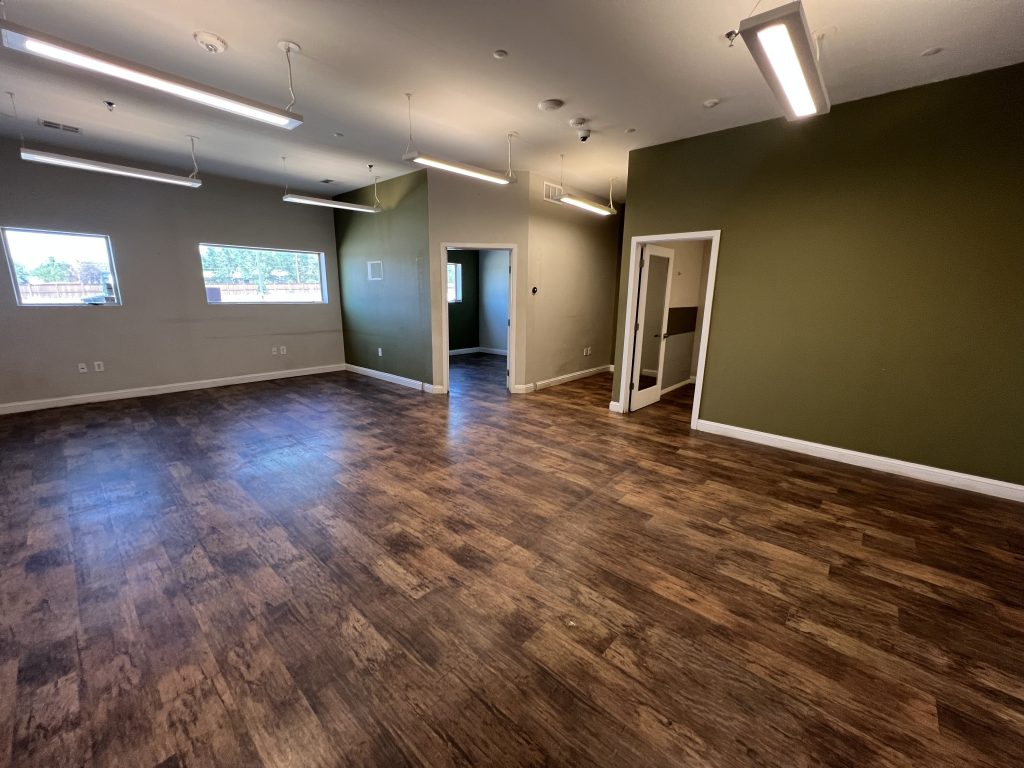
When a company starts retail leasing work in LoHi, too many choices can be as unhelpful as too few. We narrow the field around visibility, signage, and storefront presence, neighboring uses and customer-generating activity, and floorplan, utilities, delivery access, and build-out so every serious option earns its place on the shortlist.
Everything in the LoHi review serves one objective: compare customer access, visibility, co-tenancy, physical requirements, occupancy cost, and lease terms for a retail location. Keeping that objective explicit makes it easier to distinguish a negotiable issue from a property limitation the business would inherit.
See our tenant representation services for the broader occupier framework; this page applies it to retail leasing with parking, access, neighborhood-scale buildings, and proximity to downtown kept in view.
How Parking, Access, and Building Scale Shape Retail Leasing
Distinctive storefronts and offices can support brand identity, but older or compact buildings may also come with system limitations, complicated improvements, or less flexibility for growth. We separate the value of character and location from the cost of making the property function for the business.
The value of the location depends on how it performs for this particular assignment. We weigh neighboring uses and customer-generating activity and lease term, options, use rights, and opening schedule against local questions involving parking, small-building constraints, improvement scope, and future expansion, then compare the result with realistic alternatives in Highland, downtown Denver, the Central Platte Valley, and other northwest-central neighborhoods.
A Business-First Way to Compare Options
The property review for retail leasing in LoHi is built around customer access, ingress and egress, and parking, visibility, signage, and storefront presence, and neighboring uses and customer-generating activity. Applying consistent criteria turns different building conditions and implementation paths into an understandable business comparison.
After the initial comparison, we map realistic trade areas and submarket options; from there we screen sites before investing in design work and tour with access, visibility, and back-of-house criteria. The continuing check on floorplan, utilities, delivery access, and build-out keeps the work tied to implementation instead of postponing execution questions.
Our commercial real estate process connects requirements, screening, tours, and negotiation; here we apply those steps to retail leasing while accounting for parking, access, neighborhood-scale buildings, and proximity to downtown.
Beyond the Headline Rate or Price
A local option deserves extra scrutiny if access, signage, utility work, or opening costs undermine the location. We measure that downside against the advantage when customer access and existing infrastructure reduce both opening risk and capital spending, then carry the difference into timing, cost, and flexibility rather than relying on appearance or asking terms alone.
A Shortlist Should Pass These Tests
The weighting changes by company. For this LoHi retail leasing assignment, we keep the following items visible so function, economics, and diligence are compared on the same basis.
- Visibility, signage, and storefront presence — compare it consistently across the serious local options.
- Neighboring uses and customer-generating activity — identify who can confirm it and whether a weak answer is disqualifying.
- Floorplan, utilities, delivery access, and build-out — classify it as a constraint, cost tradeoff, or negotiation point for LoHi.
- Total occupancy cost and landlord contribution — decide whether it belongs in screening, diligence, or negotiation.
How the Right Question Changes the Shortlist
An option in LoHi should not win simply because its first-year number is attractive. For a retailer planning a new location, the comparison changes if access, signage, utility work, or opening costs undermine the location and improves when customer access and existing infrastructure reduce both opening risk and capital spending. We carry those differences into the financial and occupancy plan.
From Criteria to Commitment
We move through the LoHi retail leasing assignment in stages so each decision improves the next one. The working schedule connects the business deadline with internal approvals and the diligence needed to keep the retail leasing decision moving without shortcuts.
- Define the customer pattern and operating requirements, then record what changed in the retail leasing comparison.
- Map realistic trade areas and submarket options, using the local requirement as the standard.
- Screen sites before investing in design work, keeping the operating requirement ahead of deal momentum.
- Tour with access, visibility, and back-of-house criteria and carry unresolved property questions forward.
For an inventory snapshot, see our current Benchmark listings. The shortlist for a Lohi retail leasing assignment is still driven by the client’s complete requirement.
Public Information That Helps Frame the Right Questions
Local source material can expose a diligence question early enough to change a retail leasing shortlist. We review the references below for context, then seek authoritative confirmation whenever the client will rely on the conclusion.
- Denver urban design standards and guidelines — Useful public information for retail leasing, especially where parking, access, neighborhood-scale buildings, and proximity to downtown affect a finalist.
- Denver zoning code — A starting point for retail leasing diligence involving parking, access, neighborhood-scale buildings, and proximity to downtown; formal determinations still require the proper authority.
- Denver building codes and standards — Helps frame local retail leasing questions tied to parking, access, neighborhood-scale buildings, and proximity to downtown before the shortlist narrows.
- RTD regional transit information — Public-source context for retail leasing decisions where parking, access, neighborhood-scale buildings, and proximity to downtown may affect cost, timing, or feasibility.
A Relationship-Driven Way to Handle the Transaction
Founded in Denver in 2013, Benchmark Commercial approaches real estate as an advisory relationship rather than a list of available properties. During retail leasing work in LoHi, we emphasize communication, honesty, simplicity, accountability, and durable relationships while keeping the commercial reasoning visible.
Our commercial real estate FAQs covers common transaction questions; this retail leasing page adds the local property layer, including parking, access, neighborhood-scale buildings, and proximity to downtown.
What Businesses Often Ask Us Here
Q: Should the retail leasing assignment in LoHi also test Highland, downtown Denver, the Central Platte Valley, and other northwest-central neighborhoods?
A: Nearby alternatives can provide leverage and a useful reality check. We include Highland, downtown Denver, the Central Platte Valley, and other northwest-central neighborhoods only when they can genuinely support the business, then compare them on the same framework.
Q: What belongs in a serious financial comparison for retail leasing work in LoHi?
A: Include rent or price, operating costs, improvements, maintenance or ownership exposure, parking where relevant, moving or downtime, increases, concessions, financing assumptions, and timing.
Q: What should we compare besides the advertised rent or asking price for retail leasing in LoHi?
A: We judge the option by its complete business case rather than by the lowest visible rate or price. Our comparison adds operating or ownership costs, improvements, timing, and flexibility.
Q: When does a lower-cost option stop being the better value during retail leasing work in LoHi?
A: The better question is what the option costs in usable condition, not what the first quoted number suggests. The better value may carry a higher first number if it avoids costly improvements, delays, operating exposure, or inflexible terms.
If you are planning a LoHi retail leasing decision, we can help you turn the requirement into a focused market comparison and a transaction plan with clear next steps.