


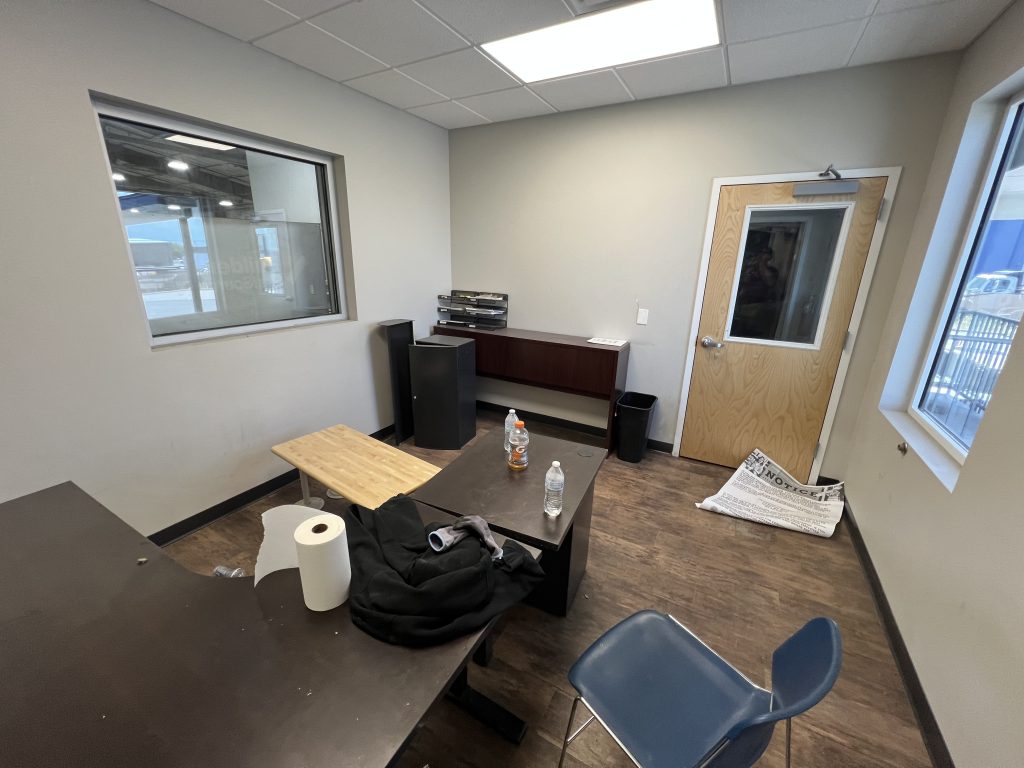
We approach office search in LoHi as a business decision with a real estate component. The requirement is built around usable layout and realistic seat count, employee and client access, including parking and transit, and existing improvements versus required build-out, giving the client a consistent basis for comparing options that may look very different on paper.
The decision standard for LoHi is whether the transaction will find and lease office space that fits headcount, workflow, access, budget, and future plans. We return to that standard whenever a new property, proposal, or diligence finding changes the apparent ranking.
See our tenant representation services for the broader occupier framework; this page applies it to office search with parking, access, neighborhood-scale buildings, and proximity to downtown kept in view.
How Parking, Access, and Building Scale Shape the Office Search
Our LoHi comparison puts building systems, technology needs, and delivery schedule beside usable layout and realistic seat count and employee and client access, including parking and transit. The purpose is to keep a favorable asking term or visual impression from outweighing the way the property will function after occupancy or closing.
Once that filter is working, we negotiate business terms while credible alternatives remain available, then coordinate lease, design, and move timing with the broader business schedule, and define headcount, workflow, budget, and timing. We keep existing improvements versus required build-out in the scorecard because it can change the effective economics or the schedule after a property looks workable.
The office space calculator can provide an early sizing reference before an office search shortlist is tested against actual availability and operating needs.
The Local Questions Behind the Shortlist
LoHi offers close proximity to downtown and the Central Platte Valley in a neighborhood-scale, mixed-use setting. Commercial opportunities are often smaller or more building-specific than in a traditional office district, which makes usable layout, customer access, parking, signage, and expansion potential important parts of the comparison.
In this service context, we translate the area’s characteristics into two immediate tests—employee and client access, including parking and transit and lease term, options, expansion rights, and assignment flexibility—while keeping parking, small-building constraints, improvement scope, and future expansion visible. This approach makes day-to-day operating needs the test for a location and uses parking, access, neighborhood-scale buildings, and proximity to downtown only where those factors affect the decision.
What Has to Work Before Price Wins
The weighting changes by company. For this LoHi office search assignment, we keep the following items visible so function, economics, and diligence are compared on the same basis.
- Usable layout and realistic seat count — identify who can confirm it and whether a weak answer is disqualifying.
- Employee and client access, including parking and transit — classify it as a constraint, cost tradeoff, or negotiation point for LoHi.
- Existing improvements versus required build-out — decide whether it belongs in screening, diligence, or negotiation.
- Full occupancy cost rather than face rent alone — determine whether it is correctable, negotiable, or an inherited limitation.
A More Disciplined Search and Negotiation Sequence
We move through the LoHi office search assignment in stages so each decision improves the next one. Each step follows the client’s real schedule and approval needs, with property diligence advanced early enough to influence the office search decision.
- Negotiate business terms while credible alternatives remain available, using the local requirement as the standard.
- Coordinate lease, design, and move timing with the broader business schedule, keeping the operating requirement ahead of deal momentum.
- Define headcount, workflow, budget, and timing and carry unresolved property questions forward.
- Screen the market before scheduling tours, with timing consequences documented at the same step.
Our commercial real estate process connects requirements, screening, tours, and negotiation; here we apply those steps to office search while accounting for parking, access, neighborhood-scale buildings, and proximity to downtown.
What a Real-World Comparison Can Reveal
One way to test a finalist in LoHi is to ask what happens after signing or closing. For a growing professional team, the layout wastes usable area, parking costs are high, or build-out pushes occupancy past the target date can become a recurring burden, while existing improvements reduce construction time and the floorplan supports the actual work pattern can reduce implementation risk and preserve flexibility.
Where Cost and Risk Hide
One risk in office search work is that the layout wastes usable area, parking costs are high, or build-out pushes occupancy past the target date. We look for it while alternatives remain credible and compare it with the value created when existing improvements reduce construction time and the floorplan supports the actual work pattern. That analysis separates deal points from limitations that would still affect the client after signing or closing.
Useful Local Sources Before Commitment
For this office search assignment, public information helps identify which assumptions deserve confirmation before the transaction narrows. The resources are useful for screening, not as replacements for the professional or governmental review required by a specific property or transaction.
- Denver urban design standards and guidelines — Public-source context for office search decisions where parking, access, neighborhood-scale buildings, and proximity to downtown may affect cost, timing, or feasibility.
- Denver zoning code — Useful for identifying the next office search diligence question when parking, access, neighborhood-scale buildings, and proximity to downtown matter to the decision.
- Denver building codes and standards — Official context for office search when parking, access, neighborhood-scale buildings, and proximity to downtown need early screening or follow-up.
- RTD regional transit information — Useful public information for office search, especially where parking, access, neighborhood-scale buildings, and proximity to downtown affect a finalist.
How We Keep the Client’s Priorities in Front
Since Benchmark Commercial was founded in Denver in 2013, the firm has emphasized relationships, communication, honesty, simplicity, and accountability. We carry that approach into the LoHi office search process by making the assumptions and tradeoffs visible enough for the client to challenge them.
Our current Benchmark listings offer a practical inventory reference while we test the full Lohi office search requirement across the market.
FAQ: Planning the Next Real Estate Step
Q: What belongs in a serious financial comparison for office search work in LoHi?
A: A complete model includes what the company pays to secure the property and what it pays to make and keep that property functional.
Q: Should the office search assignment in LoHi also test Highland, downtown Denver, the Central Platte Valley, and other northwest-central neighborhoods?
A: Yes, if Highland, downtown Denver, the Central Platte Valley, and other northwest-central neighborhoods are operationally realistic. Testing them against the same office search criteria shows whether the preferred location creates enough value to justify its tradeoffs.
Q: How early should a company begin office search work in LoHi?
A: For office search work, we prefer to begin while several outcomes are still realistic. The schedule should allow for requirements, market research, property questions, proposals, and negotiation.
Q: How do we keep office search work in LoHi focused on viable options?
A: The search stays useful when every finalist has a reason to be there. We screen against hard operating needs first and then decide which tradeoffs deserve additional review.
A stronger LoHi decision starts with clear requirements and enough time to create alternatives. We can help build that framework and carry it through negotiation.